


 اختر منطقتك
«من قاسيون الشام جينا تهامة.. الفخر والناموس والعز عنوان».. بهذا البيت، حمل وزير الثقافة السوري، الشاعر والأديب محمد ياسين الصالح، تحية شعرية إلى المملكة وقيادتها، خلال أمسية «بين طيبة ودمشق.. قصيدة» التي احتضنتها المدينة المنورة.
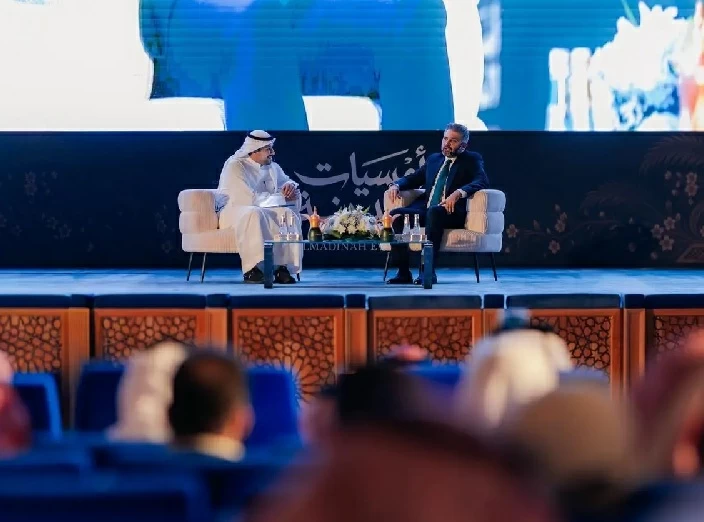
وأقيمت الأمسية في مركز الملك سلمان الدولي للمؤتمرات، ضمن (أمسيات المدينة)، وشهدت حوارًا أدبيًا مع الوزير السوري، أداره الدكتور فيصل الشهراني، إلى جانب إلقاء عدد من قصائده التي عكست معاني المودة والوفاء، واستحضرت الروابط الثقافية والتاريخية بين سوريا والمملكة.
واختصر البيت الشعري المسافة بين قاسيون وتهامة في صورة وجدانية لافتة؛ فالجبل الدمشقي حضر رمزًا للشام، فيما جاءت تهامة بوابة للتحية والاعتزاز بالمملكة، لتتحول القصيدة إلى جسر يصل بين المكانين، ويمنح الأمسية بعدها الإنساني والثقافي.
وشهد اللقاء حضور عدد من المسؤولين والمثقفين والمهتمين بالشعر والأدب، وسط تفاعل مع تجربة الصالح الشعرية ومحطات من مسيرته، بما جعل الأمسية مساحة للحوار واستعادة الذاكرة والاحتفاء باللغة العربية.
وهكذا بدت «بين طيبة ودمشق» أكثر من أمسية شعرية؛ فقد جمعت الشعر بالوفاء، والذاكرة بالمكان، ودمشق بطيبة، في مشهد ثقافي حملته قصيدة بدأت من قاسيون، وانتهت عند تهامة محملة بالفخر والعز.
“From Qasioun of Sham we came to Tihama.. pride, honor, and dignity are the title”.. with this verse, the Syrian Minister of Culture, poet and writer Mohammad Yasin Al-Saleh, delivered a poetic greeting to the Kingdom and its leadership during the evening “Between Taiba and Damascus.. a Poem” held in Medina.
The evening took place at the King Salman International Conference Center, as part of the (Evenings of Medina), and featured a literary dialogue with the Syrian minister, moderated by Dr. Faisal Al-Shahrani, alongside the recitation of several of his poems that reflected meanings of affection and loyalty, and evoked the cultural and historical ties between Syria and the Kingdom.
The poetic verse succinctly bridged the distance between Qasioun and Tihama in a striking emotional image; the Damascene mountain served as a symbol of Sham, while Tihama appeared as a gateway for greeting and pride in the Kingdom, transforming the poem into a bridge connecting the two places, granting the evening its human and cultural depth.
The gathering witnessed the presence of several officials, intellectuals, and those interested in poetry and literature, amidst engagement with Al-Saleh’s poetic experience and milestones from his journey, making the evening a space for dialogue, memory revival, and celebration of the Arabic language.
Thus, “Between Taiba and Damascus” seemed more than just a poetry evening; it combined poetry with loyalty, memory with place, and Damascus with Taiba, in a cultural scene carried by a poem that began in Qasioun and ended in Tihama, laden with pride and dignity.